Saturday, April 2, 2011

Arthur Shimkin

Arthur Shimkin (1922-2006) was a record producer. The former head of '50s pop label Bell Records, Shimkin worked on many Sesame Street albums in the '70s and '80s, first as project supervisor, and later as producer.
In all, the 3,000 records to his credit sold more than 5 million copies.He was nominated for 13 Grammys.
At Simon & Schuster, he conceived Little Golden Records, storybooks read on two-sided 45 r.p.m. records. Predecessors to audiobooks on tapes and CDs, they starred Bing Crosby, Alfred Hitchcock, Roy Rogers, Burl Ives, and Johnny Cash.
He died in his Manhattan home on December 4, 2006, at the age of 84.

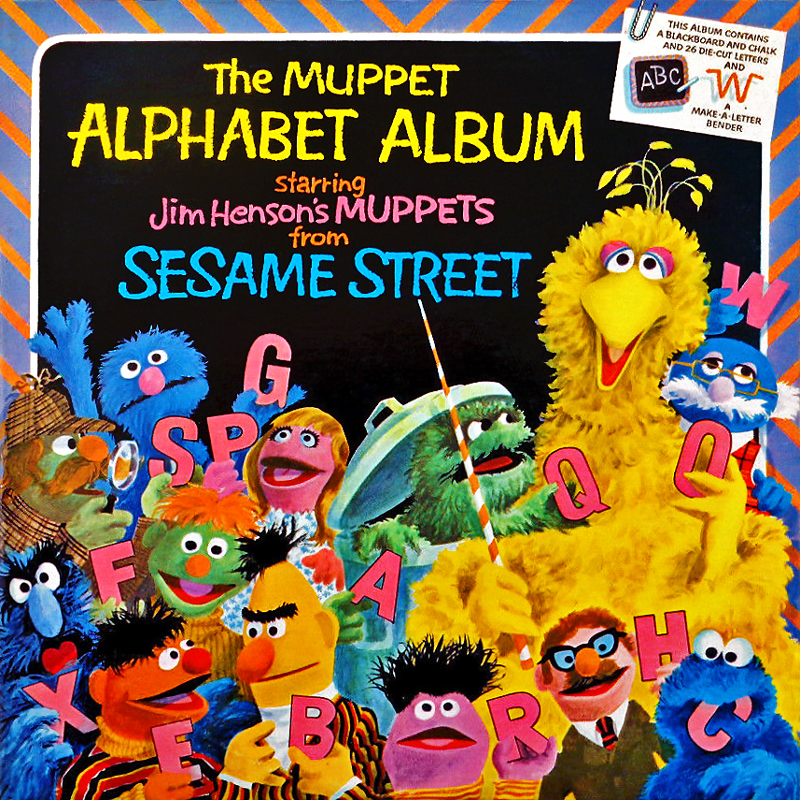
The Muppet Alphabet Album

The Muppet Alphabet Album was the first Sesame Street album that was hosted solely by the Muppets without assistance from the human cast. It was originally packaged in a gatefold sleeve, featuring visualizations of each letter of the alphabet by Smollin Associates. The original package contained 26 small punch-out letter-shaped books illustrating the songs, plus a letter-shaping pipe cleaner, a blackboard and chalk. The songs from this album were also released on seven consecutively numbered 45-rpm, 7-inch records. The album was also released simultaneously on a "Carry About" boxed set of 45s. The LP edition reached #189 on Billboard's Top LP's chart in early 1972. The album was also nominated for a Grammy Award for Best Recording for Children, but it lost to the cast album from The Electric Company.
The 1976 reissue dropped the inserts, and the gatefold contained new "Learn Your Letters" artwork which did not directly correspond to the content of the songs. In 1977, the album was reissued as part of the 3-LP boxed set, Letters, Numbers and Signs.
This album was reissued many times over the years on records, cassettes and 8-tracks, sometimes with slight title changes. More recently, a new CD and cassette edition was released, under the title Sing the Alphabet, with some minor changes (see below for details).

Friday, April 1, 2011

Agra Fort ,India ,Photo Gallery

Jama Masjid, Red Fort, India
Agra Fort ,India
Agra Fort ,India

Agra-Fort-Diwan-i-Am-Hall-of-Public-Audience

Agra-Fort-Diwan-i-Am-Hall-of-Public-Audience

Uttar-Pradesh-Agra-Agra Fort-Jahangiri-mahal

Uttar-Pradesh-Agra-Agra-Fort-inscription

Agra Fort ,India History ,Layout ,Sites and Structure Of Agra Fort

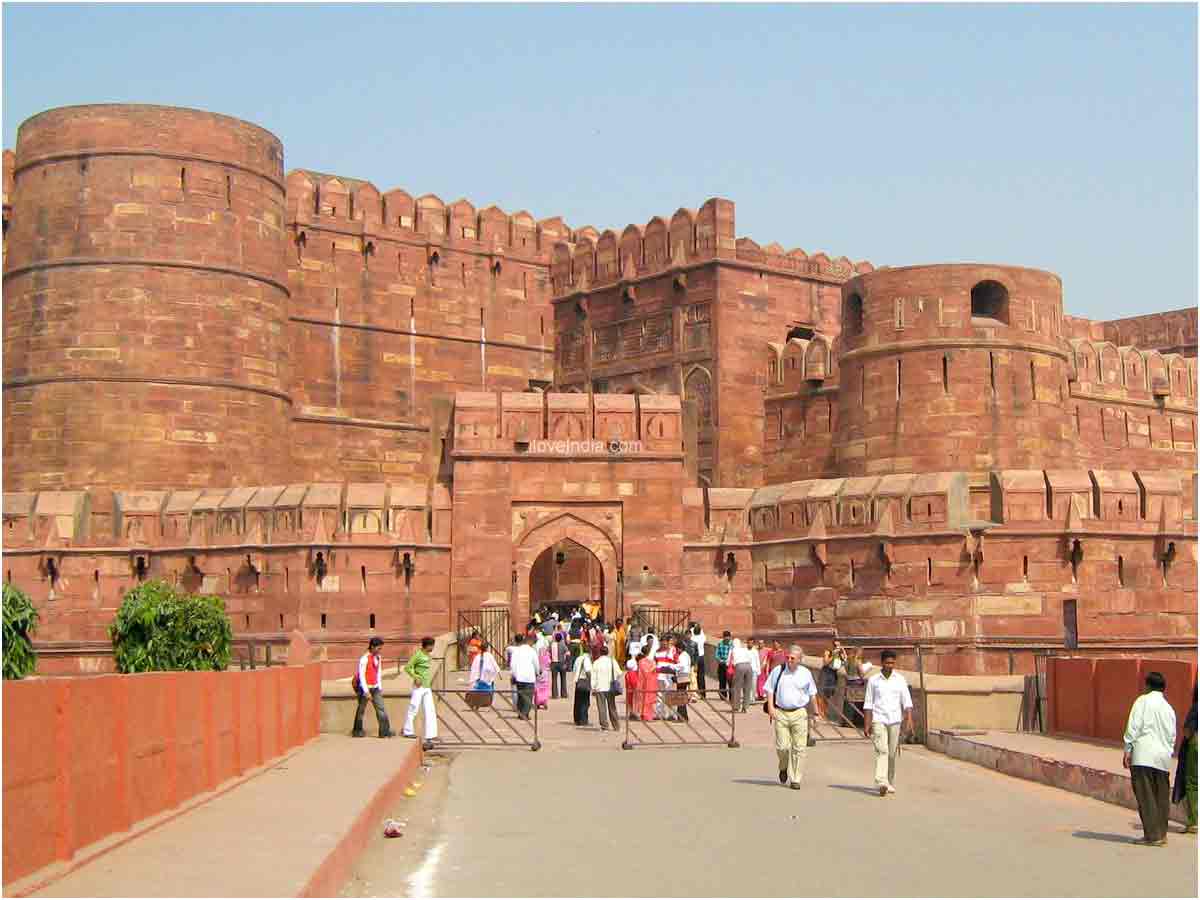
Agra Fort (Hindi: आगरा क़िला, Urdu: آگرہ قلعہ) is a UNESCO World Heritage site located in Agra, India. It is about 2.5 km northwest of its more famous sister monument, the Taj Mahal. The fort can be more accurately described as a walled city.
.After Panipat, Mughals captured the fort and a vast treasure - which included a diamond that was later named as the Koh-i-Noor diamond - was seized. Babur stayed in the fort in the palace of Ibrahim. He built a baoli (step well) in it. Humayun was crowned here in 1530. Humayun was defeated in Bilgram in 1540. Sher Shah held the fort for five years. The Mughals defeated the Afghans finally at Panipat in 1556.
Realizing the importance of its central situation, Akbar made it his capital and arrived in Agra in 1558. His historian, Abdul Fazal, recorded that this was a brick fort known as 'Badalgarh' . It was in a ruined condition and Akbar had it rebuilt with red sandstone from Barauli area in Rajasthan. Architects laid the foundation and it was built with bricks in the inner core with sandstone on external surfaces. Builders worked on it for eight years, completing it in 1573.
It was only during the reign of Akbar's grandson, Shah Jahan, that the site took on its current state. The legend is that Shah Jahan built the beautiful Taj Mahal for his wife, Mumtaz Mahal. Unlike his grandfather, Shah Jahan tended to have buildings made from white marble, often inlaid with gold or semi-precious gems. He destroyed some of the earlier buildings inside the fort in order to make his own.
At the end of his life, Shah Jahan was imprisoned by his son, Aurangzeb, in the fort. It is rumored that Shah Jahan died in Musamman Burj, a tower with a marble balcony with a view of the Taj Mahal.
The fort was the site of a battle during the Indian rebellion of 1857, which caused the end of the British East India Company's rule in India, and led to a century of direct rule of India by Britain.

Layout

Inside the Musamman Burj, where Shah Jahan spent the last seven years of his life under house arrest by his son [[arijit ]]
Map of the fort
The 94-acre (380,000 m2) fort has a semicircular plan, its chord lies parallel to the river and its walls are seventy feet high. Double ramparts have massive circular bastions at intervals, with battlements, embrasures, machicolations and string courses. Four gates were provided on its four sides, one Khizri gate opening on to the river.
Two of the fort's gates are notable: the "Delhi Gate" and the "Lahore Gate." The Lahore Gate is also popularly also known as the Amar Singh Gate, for Amar Singh Rathore.
Decorated column
The monumental Delhi Gate, which faces the city on the western side of the fort, is considered the grandest of the four gates and a masterpiece of Akbar's time. It was built circa 1568 both to enhance security and as the king's formal gate, and includes features related to both. It is embellished with inlay work in white marble, proof to the richness and power of the Great Mughals. A wooden drawbridge was used to cross the moat and reach the gate from the mainland; inside, an inner gateway called Hathi Pol ("Elephant Gate") - guarded by two life-sized stone elephants with their riders - added another layer of security. The drawbridge, slight ascent, and 90-degree turn between the outer and inner gates make the entrance impregnable. During a siege, attackers would employ elephants to crush a fort's gates. Without a level, straight run-up to gather speed, however, something prevented by this layout, elephants are ineffective.
Because the Indian military (the Parachute Brigade in particular) is still using the northern portion of the Agra Fort, the Delhi Gate cannot be used by the public. Tourists enter via the Amar Singh Gate.
The site is very important in terms of architectural history. Abul Fazal recorded that five hundred buildings in the beautiful designs of Bengal and Gujarat were built in the fort. Some of them were demolished by Shahjahan to make way for his white marble palaces. Most of the others were destroyed by the British between 1803 and 1862 for raising barracks. Hardly thirty Mughal buildings have survived on the south-eastern side, facing the river. Of these, the Delhi Gate and Akbar Gate and one palace - "Bengali Mahal" - are representative Akbari buildings.
Akbar Darwazza (Akbar Gate) was renamed Amar Singh Gate by the British. The gate is similar in design to the Delhi Gate. Both are built of red sandstone.
The Bengali Mahal is built of red sandstone and is now split into Akbari Mahal and Jahangiri mahal.
Some of the most historically interesting mixing of Hindu and Islamic architecture are found here. In fact, some of the Islamic decorations feature haraam (forbidden) images of living creatures - dragons, elephants and birds, instead of the usual patterns and calligraphy seen in Islamic surface decoration.

Sites and structures

The Khas Mahal
Jahangiri mahal
  • Anguri Bagh (Grape Garden)- 85 square, geometrically arranged gardens
  • Diwan-i-Am (Hall of Public Audience) - was used to speak to the people and listen to petitioners and once housed the Peacock Throne
  • Diwan-i-Khas (Hall of Private Audience) - was used to receive kings and dignitary, features black throne of Jehangir
  • Golden Pavilions - beautiful pavilions with roofs shaped like the roofs of Bengali huts
  • Jahangiri Mahal - built by Akbar for his son Jehangir
  • Khas Mahal - white marble palace, one of the best examples of painting on marble
  • Macchi Bhawan (Fish Enclosure) - grand enclosure for harem functions, once had pools and fountains
  • Mina Masjid (Heavenly Mosque) - private mosque used by mujahara
  • Moti Masjid (Pearl Mosque) - mosque built for use by members of royal court
  • Musamman Burj - a large, octagonal tower with a balcony facing the Taj Mahal
  • Takht-i-Jahangir - Throne of Jahangir
  • Nagina Masjid (Gem Mosque) - mosque designed for the ladies of the court
  • Naubat Khana (Drum House) - a place where the king's musicians played
  • Rang Mahal - where the king's wives and mistresses lived
  • Shahi Burj - Shah Jahan's private work area
  • Shah Jahani Mahal - Shah Jahan 's first attempt at modification of the red sandstone palace
Shish Mahal's glass works
  • Sheesh Mahal or Shish Mahal (Mirror Palace) - royal dressing room featuring tiny mirror-like glass-mosaic decorations, and drums built into the walls.
  • Zenana Mina Bazaar (Ladies Bazaar) - right next to the balcony, where only female merchants sold wares
the countrys name is also called the agra forts

Popular culture

  • The Agra Fort won the Aga Khan Award for Architecture in 2004. India Post issued a stamp to commemorate this event
  • The Agra Fort plays a key role in the Sherlock Holmes mystery The Sign of the Four, by Sir Arthur Conan Doyle.
  • The Agra Fort was featured in the music video for Habibi Da, a hit song of Egyptian pop star Hisham Abbas.
  • Shivaji came to Agra in 1666 as per the "Purandar Treaty" entered into with Mirza Raje Jaisingh to met Aurangzeb in the Diwan-i-Khas. In the audience he was deliberately placed behind men of lower rank, Insulted he stormed out of the imperial audience and was confined to Jai Sing 's quarters on 12 May 1666. Fearing the dungeons and execution, in a famously sweet legend, he escaped on 17 August 1666. A heroic equestrian statue of Shivaji has been erected outside the fort.
  • In the second expansion pack for the videogame Age of Empires 3, the Asian Dynasties, Agra fort is one of five wonders for the Indian civilization.

U.S. Bank Tower (Sacramento)

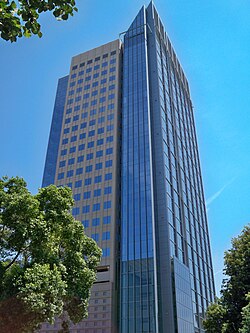
U.S. Bank Tower (also called 621 Capitol Mall) is a 25 story, 123 m (404 ft) building in Sacramento, California. The office tower is located at 621 Capitol Mall and was completed in early 2008. U.S. Bank bought the naming rights and 34,000 sq ft (3,200 m2) of office space. The building's architect is Hellmuth, Obata + Kassabaum, Inc. (HOK) and the general contractor is Hensel Phelps Construction.
The building has a series of LED screens on the top that seem to form a flowing river or waterway at night, with colors changing from light/dark blues to purples.

The tower as completed in 2008.
Former/other name(s) 621 Capitol Mall
General information
Location 621 Capitol Mall
Sacramento, California
Coordinates 38.578611°N 121.499167°WCoordinates: 38.578611°N 121.499167°W
Status Complete
Groundbreaking 2006
Opening Spring 2008
Use Commercial offices
Height
Roof 122.5 m (402 ft)
Technical details
Floor count 25
Elevators 9
Companies involved
Hellmuth, Obata and Kassabaum
Contractor Hensel Phelps Construction
Developer David S. Taylor Interests

U.S. Bancorp

U.S. Bancorp is a diversified financial services holding company, headquartered in Minneapolis, Minnesota. It is the parent company of U.S. Bank, the fifth largest commercial bank in the United States based on $310 billion in assets. U.S. Bank ranks as the sixth largest bank in the U.S. based on deposits, with $204B in deposits as of December 31, 2010. With 3,069 banking offices and 5,310 ATMs, U.S. Bank's branch network serves 25 states. U.S. Bancorp offers regional consumer and business banking and wealth management services, national wholesale and trust services and global payments services to more than 15.8 million customers. The company employs over 60,000 people.
U.S. Bank National Association (U.S. Bank) is a nationally chartered bank, regulated by the Office of the Comptroller of the Currency, Department of the Treasury.

Rankings and awards

U.S. Bancorp is ranked 121 in the 2010 list of Fortune 500 companies.
U.S. Banker magazine, published by SourceMedia, has ranked U.S. Bancorp’s women leaders as the top banking team in its annual "Most Powerful Women in Banking" issue in 2006, 2007, 2008 and 2009.
U.S. Bancorp is ranked #1 by Institutional Investor magazine in its 2009 "America's Most Shareholder-Friendly Companies" for the Financial Institutions/Large-Cap category.
Kiplinger's 2009 "Best List" ranked U.S. Bank's FlexPerks card best if you want travel perks.
In July 2009, U.S. Bancorp was named the "Best Bank in the U.S." by Euromoney magazine as part of its 2009 Awards for Excellence.
U.S. Bank has been ranked first in the nation in the Privacy Trust Study for Retail Banking conducted by the Ponemon Institute in 2006, 2007,2008 and 2009.

History

Today’s U.S. Bank was forged during the 1990s from the combination of several major regional banks, including Star Bank, WestOne Bank, Firstar, Mercantile, First Bank System, U.S. Bank, and Colorado National Bank. Those banks, in turn, had grown from the mergers of numerous smaller banks throughout the years. In the eastern part of the franchise, U.S. Bank traces some of its earliest roots to 1853 when Farmers and Millers Bank in Milwaukee opened its doors, growing into the First National Bank of Milwaukee and eventually becoming First Wisconsin and ultimately Firstar. In St. Louis, State Savings Institution, with just $8,500 in capital and one teller, opened in St. Louis in 1850, later to become part of the Mercantile Trust Company, the forerunner of Mercantile Bancorporation. In Cincinnati, The First National Bank of Cincinnati opened for business in 1863 under National Charter #24 with the boom of Civil War cannons firing just across the Ohio, but it survived through many more decades to grow into Star Bank. About this same time, the First National Bank of St. Paul and the First National Bank of Minneapolis were chartered in 1864. These two First Nationals formed a holding company in early 1929, known as First Bank Stock Corporation, and they kept that name until 1968 when they became First Bank System. Across the Rocky Mountains in 1891, several prominent business leaders received a charter for The United States National Bank of Portland, Oregon, a de novo banking company.
From their largely unremarkable beginnings, these banks thrived as independent entities, each growing into a respected force (and usually the largest commercial bank) in their respective marketplaces. As opportunities arose, each participated in in-market mergers and acquisitions during the early decades of the 20th century and in more widespread expansions during the 1980s and 1990s — including the 1993 transaction that brought Colorado National Bank in Denver into the First Bank System, and West One Bancorp of Boise, Idaho, coming into the original U.S. Bancorp in 1995.
Of particular note, in 1902 the U.S. National Bank of Portland was merged into the Ainsworth National Bank of Portland, but kept the U.S. National Bank name. The decision turned out to be an auspicious one, as a 1913 federal law prohibited other banks from using “United States” in their names from that time forward. U.S. National was among the first banks to form a bank holding company — called U.S. Bancorp.
Since 1988 alone, mergers with and acquisitions of more than 50 banks, large and small, have helped form today’s U.S. Bank. During the 1990s, Star, Firstar, and Mercantile merged to become the new Firstar, and First Bank System and U.S. Bancorp combined as U.S. Bancorp. On February 27, 2001, Firstar and U.S. Bancorp became today’s new U.S. Bancorp.
The present day U.S. Bancorp was created by the merger of Firstar Corporation in Milwaukee, Wisconsin, and Star Bank in Cincinnati, Ohio in 1999. Five months later, Firstar acquired the Mercantile Bancorporation of St. Louis, Missouri. The last major acquisition was Firstar's buyout of U.S. Bancorp, headquartered in Minneapolis, Minnesota completed on February 27, 2001. Firstar retained U.S. Bancorp's name and headquarters.
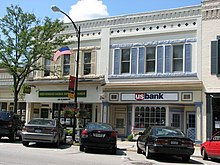
US Bank in Hudson, Ohio.
The original U.S. Bancorp succeeded the United States National Bank of Portland established in Portland, Oregon in 1891; it changed its name to the United States National Bank of Oregon in 1964. That corporation was acquired in 1997 by First Bank System, Inc., which had its headquarters in Minneapolis, Minnesota. With that acquisition, First Bank System changed its name to U.S. Bancorp. First Bank System was the successor of a bank holding company formed in 1929 by several banks in the Upper Midwest, most notably the First National Bank of Minneapolis and the First National Bank of St. Paul, both of which had been established in 1864.
On November 14, 2008, U.S. Bancorp received $6,599,000,000 from the Emergency Economic Stabilization Act in the form of a preferred stock and related warrants. On November 21, 2008 U.S. Bank purchased Downey Savings & Loan Assn FA from Downey Financial Corp and Pomona First Fed Bk & Tr(PFF) from PFF Bancorp Inc,CA. At year-end 2008, U.S. Bancorp had total assets of $266 billion, and U.S. Bank was the 6th-largest commercial bank within the United States. On June 17, 2009, U.S. Bancorp redeemed the $6.6 billion of preferred stock and on July 15, 2009, it completed the purchase of a warrant held by the U.S. Treasury Department. This effectively concluded U.S. Bancorp’s participation in the Capital Purchase Program. It was among the first banks to repay the Troubled Asset Relief Program (TARP) funds.
On October 5, 2009 US Bancorp announced its acquisition of the mutual fund administration and accounting servicing division of Fiduciary Management, Inc. On October 7, 2009 U.S. Bank, agreed to buy the bond trustee business of First Citizens Bank, a subsidiary of First Citizens BancShares Inc. On October 14, 2009 U.S. Bank agreed to acquire the Nevada banking operations of BB&T Corp. On October 20, 2009 US Bancorp completed a transaction to purchase FBOP Corporation’s nine subsidiary banks from the FDIC: BankUSA, National Association (AZ), California National Bank (CA), Citizens National Bank (TX), Community Bank of Lemont (IL), Madisonville State Bank (TX), North Houston Bank (TX), Pacific National Bank (CA), Park National Bank (IL), and San Diego National Bank (CA). The banks in Texas have since been sold.
On January 28, 2011, US Bancorp acquired the assets and deposits of First Community Bank of New Mexico. That is the first entry into New Mexico, its 25th state.

Lines of business

The US Bank tower in downtown Denver, Colorado.
U.S. Bancorp operates four main lines of business that serve individuals, businesses of all sizes, municipalities and other financial institutions.
U.S. Bancorp and its subsidiaries, including U.S. Bank, provide a comprehensive selection of premium financial products and services to individuals, businesses, nonprofit organizations, institutions, and government entities. U.S. Bank products and services are distributed primarily through four major lines of business.
Consumer Banking delivers products and services to the broad consumer market and small businesses, and encompasses community banking, metropolitan banking, small business banking, consumer lending, mortgage banking, workplace banking, student banking, 24-hour banking, and investment products and insurance sales.
Wholesale Banking offers lending, depository, treasury management, and other financial services to middle-market, large corporate, and public-sector clients.

U.S. Bank Stats

U.S. Bancorp operates under the second-oldest continuous national charter, originally Charter #24, granted during Abraham Lincoln’s administration in 1863 following the passage of the National Banking Act. Earlier charters have expired as banks were closed or acquired, raising U.S. Bank from #24 to #2.
U.S. Bank has full-service branch offices in more states than any other bank.
U.S. Bank helped to finance Charles Lindbergh’s historic flight across the Atlantic.
U.S. Bank is the fifth-largest check processor in the nation, handling 4 billion paper checks annually at 12 processing sites. The bank’s air and ground courier fleet moves 15 million checks each day.

Payment services

Through its payment services line of business, U.S. Bancorp delivers payment solutions and services for individuals and businesses across the globe.
Elavon is a wholly owned U.S. Bancorp subsidiary providing merchant processing services worldwide.
These divisions are also part of Payment Services:
  • Corporate Payment Systems
  • Elavon: Credit, debit, electronic check, and gift card merchant processing
  • Retail Payment Solutions: debit, credit, small business, gift and specialty card issuance
  • Healthcare Payment Solutions
  • Financial Institution services

Wholesale banking

U.S. Bancorp’s wholesale banking business line serves large companies, nonprofit organizations and municipalities. It provides deposit services, payments, treasury management services, financing, leasing, investments, and international trade financing.
These functions are a part of wholesale banking at U.S. Bancorp:

  • National Corporate Banking
  • Middle Market Commercial Banking
  • Commercial Real Estate
  • Correspondent Banking
  • Dealer Commercial Services
  • Foreign Exchange
  • Government Banking
  • International Banking
  • Treasury Management
  • Business Equipment Finance & Leasing
  • Small Business Administration (SBA) Division
  • Specialized Industries and Finance
  • Title Industry Banking
  • Homeowners Association Banking

Wealth Management & Securities Services

U.S. Bancorp’s Wealth Management & Securities Services business line provides services for individuals, institutions, businesses and municipalities to build, manage, preserve and protect wealth, as well as provide custody, delivery and obligation services.
Included in this business line are:
  • The Private Client Reserve
  • U.S. Bancorp Investments, Inc.
  • U.S. Bancorp Insurance Services, LLC
  • Corporate Trust Services
  • Institutional Trust & Custody
  • FAF Advisors, Inc.
  • U.S. Bancorp Fund Services, LLC

Consumer banking

U.S. Bancorp’s consumer banking division serves consumers and small businesses. This line of business includes:
  • Community Banking
  • Metropolitan Branch Banking
  • In-store and Corporate On-Site Banking
  • Small Business Banking
  • Consumer Lending
  • 24-Hour Banking & Financial Sales
  • Home Mortgage
  • Community Development
  • Workplace and Student Banking
  • Transaction Services: ATM and Debit Processing and Services

Coverage

U.S. Bankcorp footprint
U.S. Bancorp payment and merchant processing services are global, and the wholesale and trust services are national. As of January 28, 2011, the consumer and business banking services are in 25 states including: Arizona, Arkansas, California, Colorado, Idaho, Illinois, Indiana, Iowa, Kansas, Kentucky, Minnesota, Missouri, Montana, Nebraska, Nevada, New Mexico, North Dakota, Ohio, Oregon, South Dakota, Tennessee, Utah, Washington, Wisconsin, and Wyoming. It also has operations in Canada and Europe.

The Journal of International Money and Finance

The Journal of International Money and Finance (print: ISSN 0261-5606, online: ISSN 1873-0639) is a peer-reviewed academic journal in economics that was established in 1982 and is published 8 times a year. It was originally published by Butterworth-Heinemann, then by Pergamon, which is now incorporated into Elsevier. The journal is in over 500 WorldCat libraries.The editor in chief is J.R. Lothian (Graduate School of Business Administration, Fordham University).

Abstracting and indexing

The journal is abstracted and indexed by ABI/Inform, Journal of Economic Literature, and Social Sciences Citation Index. According to the Journal Citation Reports, its 2009 impact factor is 0.923.